What Certifications Should Medical Products Have in 2026?

Time:2026-10-04 Author:Aria
0%

In 2026, buyers will ask a sharper question: what certifications should medical products have before entering hospitals, pharmacies, or home-care settings? The answer depends on the product’s risk, intended use, and target market. A sterile implant, digital thermometer, diagnostic kit, and AI-supported device do not follow the same approval path.

WHO Director-General Tedros Adhanom Ghebreyesus has emphasized, “Quality, safety and efficacy are the three pillars of medicines regulation.” That principle remains practical. A credible product may need regulatory clearance, an audited quality management system, and evidence supporting its intended performance. ISO 13485 certification can demonstrate controlled manufacturing processes, but it does not replace market authorization. In Europe, many devices may require CE marking under applicable rules. In the United States, FDA clearance, approval, or registration may apply differently.

Details matter.

A manufacturer should also examine biocompatibility, electrical safety, cybersecurity, sterilization, labeling, and post-market monitoring. A certificate on a website means little without traceable test reports, current scope, and an identifiable issuing body. I have seen teams focus on the logo and overlook the certificate’s expiration date. That mistake is easy to make.

This guide explores what certifications should medical products have in 2026. It also considers supplier audits, clinical evidence, changing digital-health expectations, and regional differences. No checklist is perfect. Regulations evolve, and certification decisions still require expert review for each product.
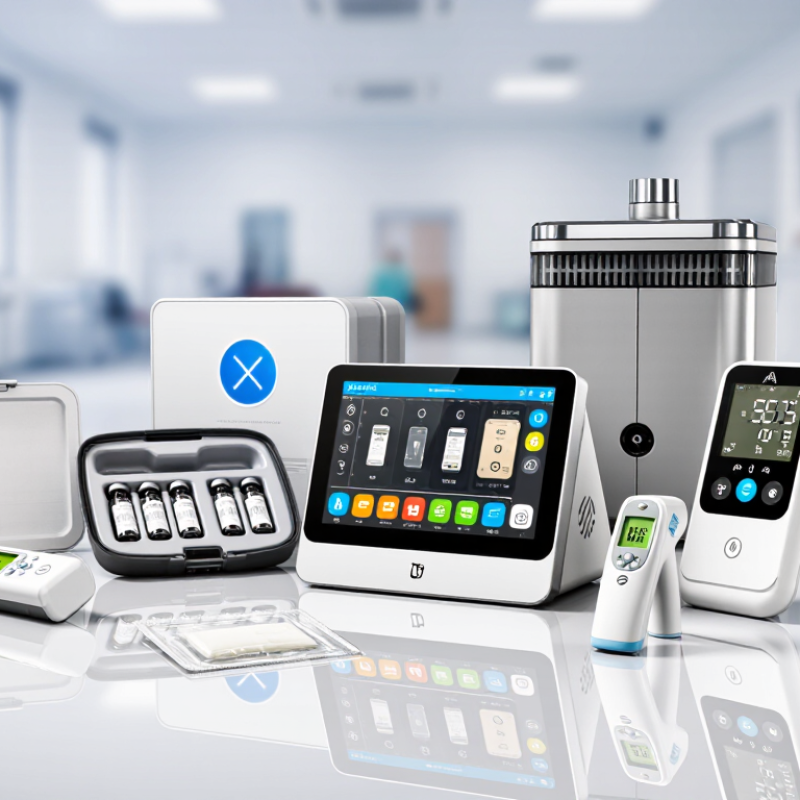
What Certifications Should Medical Products Have in 2026?

Defining Medical Product Certifications in 2026

Defining medical product certifications in 2026 requires more than listing certificates on a website. A certification shows that a product, process, or facility meets a defined requirement. It does not automatically prove clinical effectiveness or approval for every market. Regulatory authorization and third-party certification are different responsibilities.

In practice, manufacturers often connect quality management with ISO 13485. Risk management usually follows ISO 14971 principles. Electrical medical equipment may need testing under IEC 60601. Materials that contact the body require biological evaluation, often guided by ISO 10993. Software and connected devices also demand documented cybersecurity controls, usability testing, and secure update procedures. These areas overlap, but they are not interchangeable.

A good certification file should match the product’s actual risks. For example, a wearable monitor needs evidence for sensors, skin contact, battery safety, alarms, and data protection. A sterile implant needs stronger evidence for packaging, sterilization, shelf life, and long-term biological response. In 2026, artificial intelligence adds another layer. Developers must explain data quality, performance limits, human oversight, and model changes. That evidence may still vary by jurisdiction.

Certificates can expire. Test reports can become outdated. A polished document set may hide weak post-market monitoring. I have seen teams treat certification as a final event, although safety evidence should continue after launch. No checklist stays perfect. Claims should remain precise, traceable, and supported by current records.

Classifying Products by Risk and Intended Use

A medical product’s intended use often matters more than its appearance. A plastic wound dressing may present limited risk, while an implanted device can affect vital organs. Regulatory systems commonly place products into low, moderate, or high-risk classes. The exact labels differ by jurisdiction, so manufacturers should verify local requirements before choosing a certification pathway.

Risk is contextual. Claims change everything.

A home-use thermometer may need evidence of accuracy, electrical safety, labeling, and usability. A sterile surgical instrument requires stronger controls for sterilization, packaging, and microbial protection. Software that analyzes medical images may face additional scrutiny because incorrect results could influence treatment decisions. Products that measure, monitor, diagnose, or deliver therapy usually require deeper validation than simple protective accessories.

Intended users also matter. A device used by trained clinicians may have different controls from one used by patients in a kitchen. Evidence should match real conditions, including cleaning, storage, battery failure, and foreseeable misuse. Quality management certification can support consistent manufacturing, while risk-management records explain how hazards were identified and reduced. These documents are useful, but they do not automatically replace market authorization, conformity assessment, or product registration.

Classification is not always obvious. A product may begin as low risk, then move into a stricter category after adding a diagnostic claim or wireless function. I have seen teams focus on paperwork before defining the product’s actual purpose. That order creates avoidable rework. A careful review should compare the intended use, user population, contact duration, invasiveness, and consequences of failure. Some assumptions will still need revision.

Identifying Core Quality and Safety Certifications

What Certifications Should Medical Products Have in 2026?

Medical products need certifications that match their risks, design, and intended market. ISO 13485 remains a core quality management standard for manufacturers. It evaluates controlled processes, supplier oversight, traceability, corrective actions, and production records. A certificate alone is not enough. Auditors may examine a batch file, training record, or complaint investigation.

ISO 14971 supports medical device risk management throughout the product life cycle. It helps teams identify hazards, estimate risks, and verify mitigation measures. Electrical products may also require testing against IEC 60601, while software-based devices often need evidence aligned with IEC 62304. Connected products should address cybersecurity, access control, update procedures, and data protection. These areas are sometimes treated as paperwork. That is a mistake.

Materials that contact the body may need biocompatibility evaluation under the ISO 10993 series. Sterile products commonly require validated sterilization and packaging processes, such as those covered by ISO 11135, ISO 11137, and ISO 11607. Requirements differ by product type and destination market. A reusable surgical instrument needs different evidence from a home diagnostic device. Some teams choose certificates too early, before defining the product’s claims. That can create expensive gaps. A stronger approach links every certificate, test report, and technical record to a specific safety claim, while an independent assessment checks whether the evidence is truly convincing.

Understanding Regional Approval and Market Access Requirements

What Certifications Should Medical Products Have in 2026?

Medical product certification is only one part of market access. Each region applies different rules for safety, performance, labeling, and clinical evidence. A product may meet international quality standards, yet still need local registration. Common foundations include a medical quality system, risk management records, electrical safety testing, and biological evaluation. The exact evidence depends on the product’s class and intended use.

Regional approval should shape development early. European markets may require conformity assessment, clinical evaluation, and post-market surveillance under current medical device rules. The United States often expects device classification, technical submissions, and facility controls. Other markets may request local representation, translated labels, or country-specific testing. Requirements can change during review. A checklist can look complete and still hide a gap.

Tips: Map every target market before final design freeze. Confirm whether a local representative is required. Keep test reports traceable to the finished product. Review labels line by line, including warnings, symbols, and instructions. Plan complaint handling before launch, not after the first shipment. In practice, teams sometimes underestimate translation control. That mistake can delay approval. Clinical claims also deserve careful review; strong wording without matching evidence may trigger questions. Certification is not the same as permission to sell. Reflect on that distinction at every regulatory checkpoint.

Verifying Certification Validity and Ongoing Compliance

A certificate is not a permanent guarantee. It is a time-bound record of conformity. The ISO Survey 2023 reported more than 31,000 ISO 13485 certificates worldwide, showing broad adoption of quality systems. Yet certificate volume does not prove current product performance. Buyers should verify the certificate number, legal manufacturer, covered sites, product scope, issue date, and expiry date. The certification body must also hold suitable accreditation.

Check the details carefully. A certificate may cover a factory, not every supplier or product line. Its scope may exclude design, sterilization, software, or post-market activities. Public certification databases can help confirm status, but records may update slowly. Request the latest audit outcome, unresolved nonconformities, corrective action plans, and evidence of closure. A scanned certificate is only a starting point.

Ongoing compliance needs operational evidence. Review complaint trends, adverse-event reporting, supplier changes, calibration records, training logs, and change-control approvals. The World Health Organization estimates that one in ten medical products in low- and middle-income countries may be substandard or falsified, making surveillance especially important. ISO 13485 certification reduces uncertainty, but it cannot replace technical testing or supplier oversight. That distinction is often missed. A clean certificate can still hide weak controls between audits. Procurement teams should revisit validity throughout the product lifecycle, not only before purchase. Some records remain incomplete, and that should trigger questions rather than automatic rejection.

What Certifications Should Medical Products Have in 2026?

Key regulatory and quality-system checkpoints for verifying certification validity and ongoing compliance

The chart highlights commonly reviewed certification and regulatory checkpoints: quality management, risk management, electrical safety, biological evaluation, and market authorization. These frameworks do not replace jurisdiction-specific requirements. In 2026, organizations should verify the certificate scope, issuing body, current standard edition, expiration or renewal status, product coverage, post-market obligations, and continued conformity.

FAQS

What does a medical product certification actually prove?

It shows that a product, process, or facility meets defined requirements. It does not automatically prove clinical effectiveness. It also does not guarantee approval in every market. That distinction matters.

Is certification the same as regulatory authorization?

No. Certification and regulatory authorization have different responsibilities. A certificate may support a submission, but it may not replace market authorization. Requirements can vary by destination.

Which quality areas should manufacturers document?

Manufacturers should document controlled processes, supplier oversight, traceability, training, and production records. They should also record corrective actions and complaint investigations. An auditor may inspect a batch file or a single training record. Paperwork alone is weak.

How should certifications match product risks?

Certifications should reflect the product’s design, use, and hazards. A wearable monitor may need evidence for sensors, skin contact, alarms, batteries, and data protection. A reusable instrument needs different evidence. Choosing certificates too early can create expensive gaps.

What evidence may electrical or software products require?

Electrical products may need safety and performance testing. Software products need controlled development records and documented risk management. Connected devices should address access control, secure updates, cybersecurity, and data protection. These controls are not interchangeable.

What evidence is important for body-contacting or sterile products?

Body-contacting materials may need biological safety evaluation. Sterile products commonly require validated sterilization, packaging, shelf-life, and storage evidence. An implant may also need evidence about long-term biological response. The details matter.

What additional concerns does artificial intelligence create?

Developers should explain data quality, performance limits, human oversight, and model changes. They should show how updates are controlled and reviewed. Evidence may differ across jurisdictions. The model is not the whole product.

Can certificates and test reports become outdated?

Yes. Certificates can expire, and test reports can lose relevance after design changes. Post-market monitoring should continue after launch. A polished file may still hide weak complaint tracking. No checklist stays perfect.

Conclusion

In 2026, understanding what certifications should medical products have begins with defining the product’s purpose, intended users, and level of potential risk. Products may require different types of evaluation depending on whether they are low-risk accessories, diagnostic tools, monitoring equipment, or higher-risk therapeutic devices. This classification helps determine the appropriate quality, safety, performance, and manufacturing certifications before a product enters the market.

Requirements also vary by region, so manufacturers should identify the approval pathways, documentation, labeling rules, and conformity assessments relevant to each target market. Core certifications should demonstrate effective quality management, reliable production controls, product safety, and consistent performance. Certification is not a one-time achievement: organizations must verify that certificates are issued by qualified bodies, remain current, cover the correct product and facility, and are supported by ongoing testing, audits, risk management, and post-market monitoring. A structured compliance review helps maintain market access and supports user confidence throughout the product’s lifecycle.

Aria

Aria

Aria is a dedicated marketing professional with a deep passion for innovative strategies and a keen understanding of our company's product offerings. With a wealth of experience in the industry, Aria excels at crafting engaging content that highlights the unique features and benefits of our......